CSGO Cases Guide
This CSGO cases guide explains where the original csgo cases came from, how they became cs2 cases when the game moved to Source 2, and why the difference between a retired and an active drop pool matters so much for value. It is an informational reference, not a buying pitch.
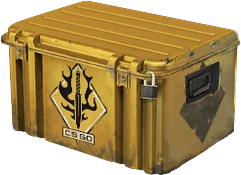
What are CSGO cases?
A csgo case is a sealed container that drops to players in Counter-Strike and holds a fixed set of weapon skins tied to specific rarity tiers. Opening one requires a matching key and returns a single randomised finish from that container's collection. Cases were first introduced during the CS:GO era, and every one of them carried straight over into Counter-Strike 2. In practice, a csgo case and a cs2 case are the same object viewed on two different engines, which is why the two terms are used almost interchangeably today.
Each container publishes the rarity tiers it can yield, running from the common Mil-Spec grade up through Restricted, Classified and Covert, with a small chance of a Rare Special item such as a knife. Those odds are fixed for the life of the case and do not shift when a container leaves the drop pool, so an old csgo case opens under exactly the same rules it always did. Understanding that fixed structure is the foundation for everything else on this page, because value follows from how many copies of a container exist, not from any change to what it can contain.
How CSGO cases carried into CS2
When Counter-Strike 2 replaced CS:GO in 2023, no inventory was reset. Every container, key and finish a player already owned simply reappeared in the new client, re-rendered under Source 2 lighting. That continuity is the reason old cases still matter: the artwork and drop tables did not change, only the presentation did. If you learned case opening in the CS:GO years, the mechanics you knew are still the mechanics that govern cs2 case prices now.
Retired vs active drop pools
The single most important concept for understanding case value is the drop pool. At any given time, Valve keeps only a limited set of containers in the "active" pool - these are the cases that can actually drop to players at the end of a match. Older containers are rotated out into the "rare drop" or fully retired category, where they either appear far less often or stop dropping altogether. An active case is being minted continuously, so its supply keeps growing. A retired case has a supply that can only shrink, because copies are steadily consumed by opening.
- Active pool - a small, rotating set of containers that still drop; supply grows over time.
- Rare drop - legacy containers that appear only occasionally; supply barely moves.
- Retired - no longer dropping at all; supply can only fall as cases are opened.
Why retired CSGO cases rise in price
The economics follow directly from that supply picture. Once a csgo case stops dropping, the only way its count can change is downward, because every opening destroys one container. Demand, meanwhile, does not disappear - people still want to open older collections for nostalgia or for a chance at a specific finish. Fixed-and-falling supply meeting steady demand pushes prices up over the long run, which is why several retired cases that once traded for pennies now sell for far more. This is a genuine market effect rather than hype, and you can see the same pattern tracked on our case prices page. Prices still move in both directions, though, so nothing here should be read as a forecast.
It also helps to separate the container from its contents. A retired case can appreciate even while the finishes inside it stay cheap, because the scarcity sits in the sealed box rather than in every skin it might yield. The reverse happens too: a single sought-after knife or Covert finish can hold value long after its case becomes plentiful. When you weigh an older csgo case, look at the mint size, the retirement status and the standout items in the pool as three separate questions rather than one.
Notable legacy case families
Some csgo cases are remembered less as single containers and more as families, because their designs and follow-up editions defined whole periods of the game. The cards below highlight a few of the best known. Every figure shown is illustrative only and exists purely to show relative scale, not a live quote.
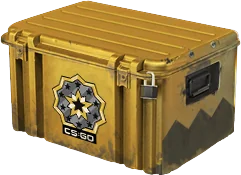
Chroma 3 Case
The Chroma line popularised vivid, colour-shifting finishes and its own knife pool.
Spectrum Case
Introduced the Spectrum finishes and helped launch a widely traded knife set.
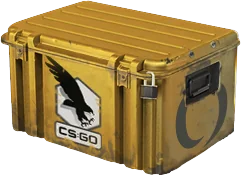
Clutch Case
A late CS:GO container that first paired weapon skins with gloves in the same drop.
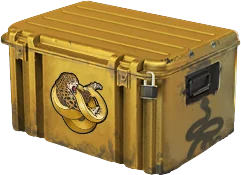
Operation Broken Fang Case
Tied to a paid operation, giving it a naturally smaller mint and strong collector demand.
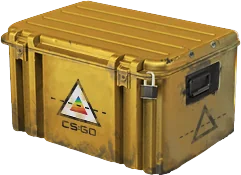
Prisma Case
Opened the Prisma line of clean, geometric finishes across common weapons.
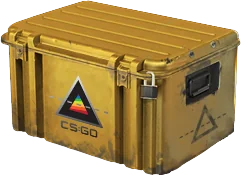
Prisma 2 Case
The follow-up edition that expanded the Prisma theme with fresh weapon skins.
Browse the full container list
Continue to the external, 18+ case-opening platform after reading the guides.
Reading value without the hype
Whether a container is a legacy csgo case or a brand-new cs2 case, three things decide its price: how large its mint is, whether it still drops, and how desirable the finishes and knives inside it are. A rare drop with a beloved skin pool will always command more than a plentiful active case with forgettable contents. If you want to go deeper on the finishes themselves, our CS2 skins guide and CSGO skins guide break down rarity and wear, while the weapon skins and skin market pages show how those finishes trade day to day. For anything not covered here, the FAQ collects the most common questions in one place.
Frequently asked questions
Are CSGO cases and CS2 cases the same thing?
Effectively yes. Counter-Strike 2 inherited every CS:GO container, so a csgo case and a cs2 case are the same item shown on the newer engine.
Why do some old csgo cases cost more than new ones?
Retired cases no longer drop, so their supply can only fall as copies are opened. Steady demand against a shrinking supply tends to lift the price over time.
What is the active drop pool?
It is the limited, rotating set of containers that can still drop to players at the end of a match. Everything outside it is either a rare drop or fully retired.
Do I need a key to open a CSGO case?
Yes. Each container requires a matching key, and opening it returns one randomised finish from that case's collection.
Which legacy families are most recognised?
Chroma, Spectrum, Prisma, Clutch and the Operation Broken Fang case are among the best remembered, each defining a distinct period of finishes.
Are the prices on this page accurate?
No. Every figure across StashClash is illustrative and for learning only. Always check a live market for current values.
Related guides
CS2 Cases Guide →
How today's active containers work and where new skins come from.
CSGO Skins Guide →
The legacy finishes that these cases first delivered.
Case Prices →
Illustrative price bands across active and retired containers.
Case Opening Guide →
The mechanics of keys, odds and how a drop is chosen.